


Rotary Bar Screen
Post a Purchase Request
Product Details
Structure and Working Principle
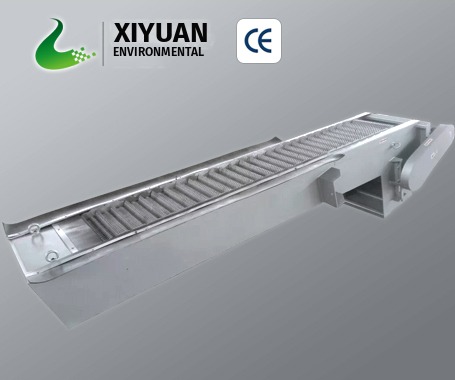
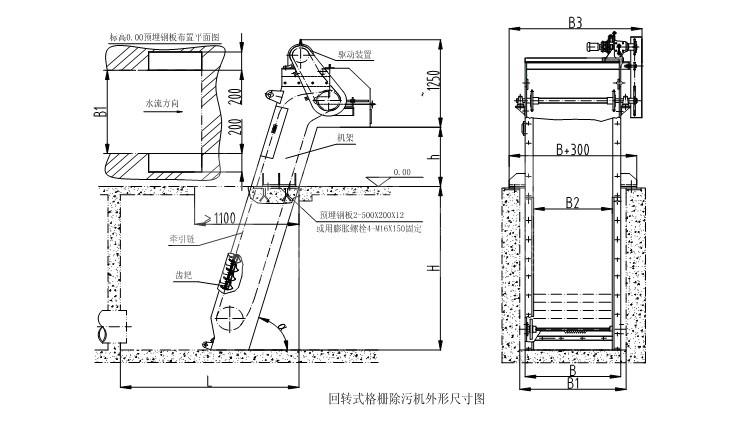
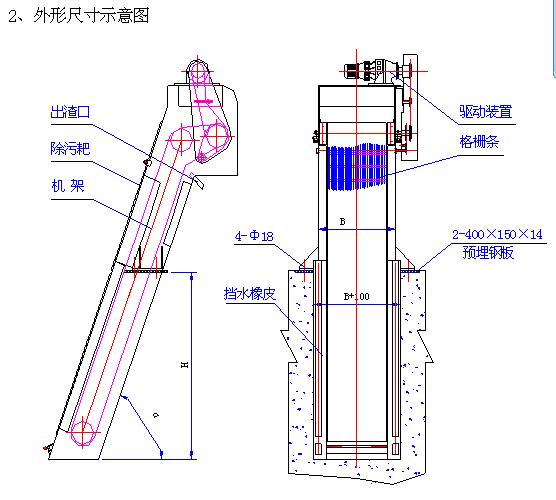
The machine's screen consists of rake teeth, rake tooth shafts and chain plates, replacing the bars of a traditional screen. The screen rotates within the frame, intercepting suspended solids in the sewage and continuously separating them from the water, so it works efficiently, runs smoothly, has a small head loss across the screen and does not clog easily. The machine is suitable for use as a coarse screen. The rake teeth can be made of engineering plastic or stainless steel, while the rake tooth shafts and chain plates are made of stainless steel, greatly improving the overall corrosion resistance of the screen. Screens with smaller gaps generally use stainless steel rake teeth. During operation, the rake teeth carry debris trapped on the screen surface upward to the discharge outlet; when the teeth turn and move downward, the debris falls off by gravity through the discharge chute into a conveyor or waste cart for removal or further treatment.
Main Features:
1. Low noise, compact structure, smooth operation.
2. One-piece frame structure with high rigidity, simple installation and little routine maintenance.
3. Simple to operate; the equipment can be controlled locally or remotely.
Operation and Maintenance Notes
Operating notes:
1. Checks before start-up
(1) Both ends of the mechanical screen bars are fixed, but improper handling during transport can cause the tail of a bar to come out of its fixed seat. Before start-up, check and confirm that every bar is fixed in place. If a bar's tail has come out of its seat, put the tail back into the corresponding hole in the seat, making sure that no more than one bar sits between two adjacent rake teeth.
(2) Screen bars must not be bent or deformed.
(3) The rake teeth of the mechanical screen must move freely between the screen bars.
(4) Check the chain tension. Although adjusted before leaving the factory, improper handling during transport may cause incorrect chain tension; in that case, adjust it according to the Routine Maintenance Notes.
2. Start-up notes
(1) Avoid reversing the gear reducer, as reverse rotation will damage the rake teeth and screen bars. Before start-up, run the motor to confirm that its direction matches the rotation arrow, then start the machine. If it runs in reverse, correct the motor wiring and run the motor again to confirm the correct direction.
(2) Confirm that the rake teeth move smoothly in the correct gaps between the screen bars.
Routine maintenance notes:
1. Chain: The chain stretches as it wears in initially. Check its tension after about 30 days of operation and adjust as follows:
(1) Confirm that the chain and sprockets are parallel.
(2) Check the chain tension. If you cannot press any slack into it with your finger, the chain is too tight; if the slack exceeds 20 mm, it is too loose.
Adjustment: Loosen the fixing bolts of the gear reducer, move the reducer lengthwise to adjust the chain to the proper tension, confirm the two sprockets are parallel, then retighten the reducer's fixing bolts.
2. Lubrication: For example, with a Y-series 380 V self-cooled waterproof geared motor rated at 120 W, after about the first 100 hours of use, use an oil gun to add 10 g of No. 50 machine oil to the reducer's oil inlet. Thereafter, the reducer must be disassembled, inspected and cleaned once a year, and No. 50 machine oil added when reassembling.
3. Long periods out of use: Run the machine 1-2 times a week for 5 minutes each time.
Rotary Bar Screen
Post a Purchase Request
Items marked with "*" are required